CB18 Banner 3

Native Land Acknowledgements

With gratitude, we acknowledge the lands and waters that shape our journeys and our learning.

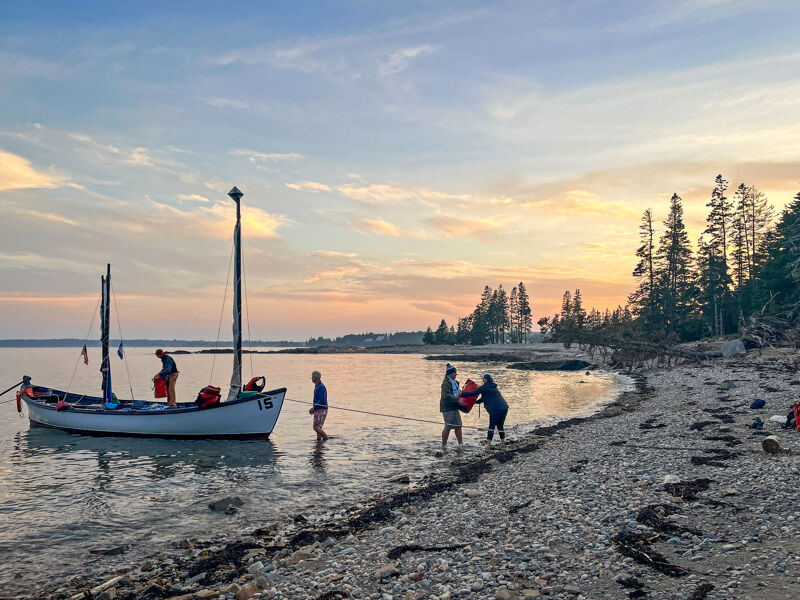
The image shows a rocky beach with a sailboat in the background. The sky is cloudy and the water is calm. There are people walking on the beach in the distance. The foreground is filled with large rocks and seaweed. Trees line the edge of the beach on the right side of the image.
Arch Element
CB13 Repeatable Callout

Honoring the Land & People Before Us

From Maine to Central America and the Bahamas, the wild places where Hurricane Island Outward Bound operates are the ancestral homelands of Indigenous peoples who have lived in relationship with these lands and waters for generations and continue to do so today. We offer this acknowledgment with respect and gratitude for the opportunity to learn, travel, and grow in places with deep history and meaning.

Outdoor spaces are central to our educational approach. When we share, protect, and learn from a place, it is important to recognize its past, understand its present, and consider our responsibility to its future. Acknowledging the land invites us to pause, appreciate those who came before us, and reflect on our role as stewards—caring not only for the landscapes that shape our courses, but also for the stories that live within them.

Maine's Coast & Islands

The coast of Maine, with its rocky islands, bays, and cold, nutrient-rich waters, has shaped human life for thousands of years. These lands and waters are the ancestral homelands of the Wabanaki peoples, including the Abenaki, Penobscot, Passamaquoddy, and Maliseet nations, who have long lived in relationship with the Gulf of Maine. Generations of people have made their livelihoods along these shores, from fishing and gathering to sustaining communities.

As we travel and teach here, we do so with gratitude for the enduring presence of the Wabanaki peoples and a commitment to care for the lands and waters that continue to sustain life.

Maine's Mountains, Rivers & Lakes

The mountains, forests, and rivers of western Maine and northern New Hampshire have shaped communities for generations. These lands are the ancestral homelands of the Wabanaki Confederacy, including the Abenaki, Penobscot, Passamaquoddy, and Maliseet nations, who continue to live in relationship with these forests and waters. The spruce-fir ridgelines, hardwood valleys, and winding rivers have long sustained travel, gathering, and community life.

As we move through these landscapes, we do so with gratitude and respect for the peoples who steward them and with an awareness of our responsibility to care for the land and waters we share.

Costa Rica

The rivers, forests, and coasts of Costa Rica are rich with life and history. These lands and waters are the ancestral homelands of the Chorotega, Malécu, Rama, Botos, Nicarao/Nahoa, Huetar, Térraba (Brörán), Brunka (Boruca), Bribri, Buglé, and Ngäbe peoples, who have lived in relationship with this land for generations and continue to do so today. From tropical dry forest and cloud forest to winding rivers and Pacific shores, these landscapes sustain both ecosystems and communities.

As we travel, learn, and partner with local communities, we do so with respect and gratitude for the peoples who have long cared for these lands and waters.

Panama

The islands and waters of Panama’s Bocas del Toro archipelago are places of ecological and cultural richness. These lands and waters are the ancestral homelands of the Guna, Ngäbe, Emberá, Eperara/Épera, and Wounaan peoples, who have lived in relationship with these islands and coasts for generations and continue to do so today. Mangrove-lined shores, coral reefs, and rainforest hills have long sustained travel, gathering, and community life.

As we explore and learn here, we do so with gratitude and respect for the people who first called this place home and for the environments that continue to sustain it.

The Bahamas

The islands and waters of the Bahamas are part of a vast archipelago of coral reefs, shallow banks, and deep Atlantic waters. These lands are the ancestral homelands of the Taíno and Lucayan peoples, who lived in close relationship with the sea and continue to shape the region today. The rhythms of tide, abundant marine life, and the interconnectedness of island and ocean have long sustained communities.

As we travel and learn in these waters, we do so with gratitude and respect for the peoples who first called these islands home and for the lands and waters that continue to sustain life.

CB29 Single CTA

Discover More About the Places We Learn

Explore more here
CB28 Multi CTA

Sign Up for Our Newsletter

+ -